
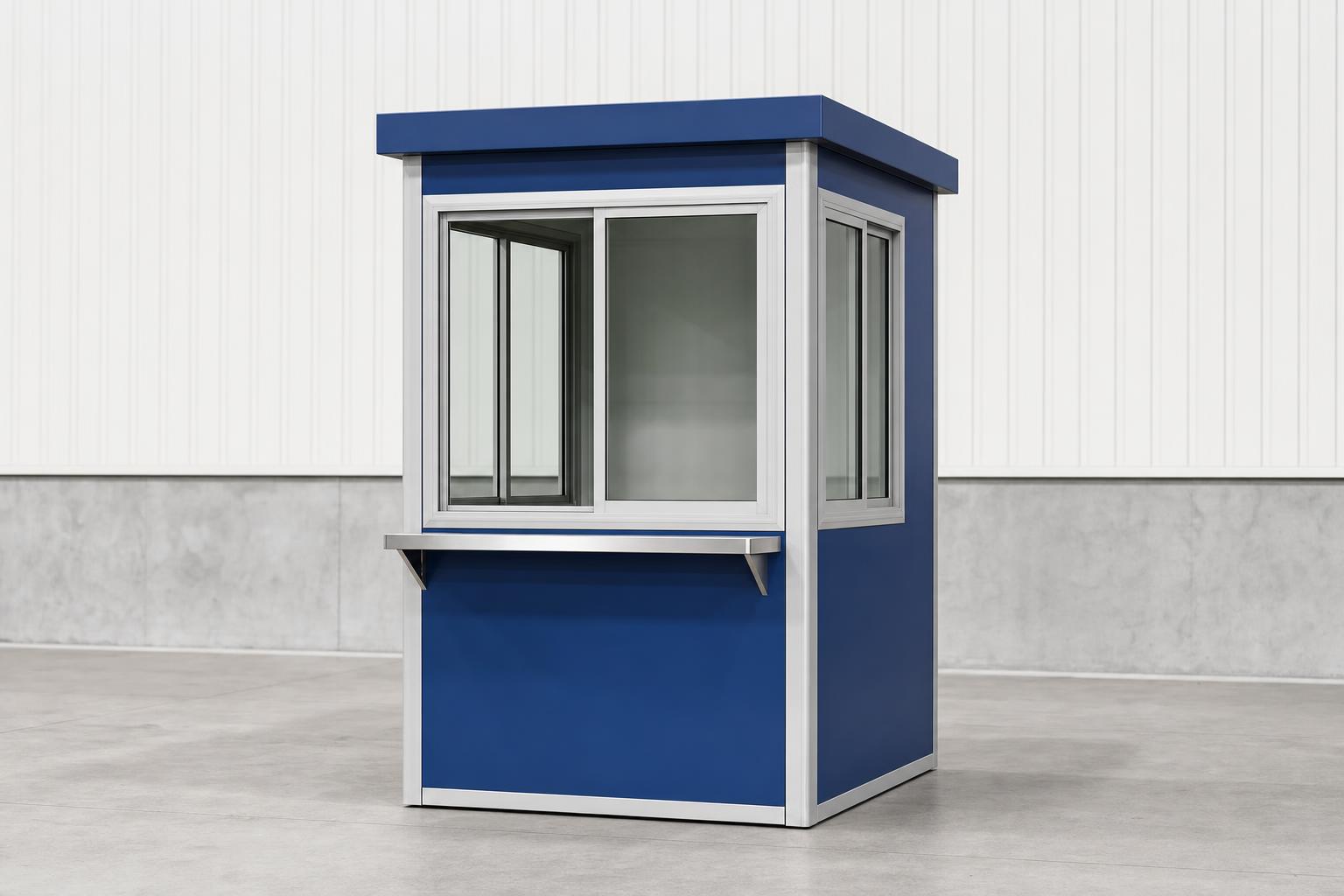
Ticket booths are essential structures for stadiums, amusement parks, parking facilities, fairgrounds, theaters, and countless other venues. Whether you are relocating a single prefabricated booth or moving a fleet of modular units to a new event site, shipping ticket booths requires careful planning, the right freight service, and a solid understanding of how size and weight affect your transportation options. At FreightSidekick, we specialize in surface freight across the United States and Canada, and we have the experience to move ticket booths of all shapes and sizes safely and efficiently.
Understanding Ticket Booth Dimensions and Weight
Before selecting a freight service, you need to have a clear picture of your ticket booth's physical specifications. Ticket booths vary widely in size and construction, from compact 4x4 ft walk-up kiosks to large, fully enclosed 10x12 ft structures with HVAC units, electrical panels, and reinforced flooring. Understanding these dimensions is the first step toward choosing the right carrier and equipment.
Here is a general overview of common ticket booth size and weight ranges:
| Booth Type | Approximate Dimensions | Estimated Weight |
|---|---|---|
| Small Kiosk | 4 ft x 4 ft x 7 ft | 500 – 1,500 lbs |
| Standard Booth | 6 ft x 8 ft x 8 ft | 1,500 – 4,000 lbs |
| Large Prefab Booth | 8 ft x 12 ft x 9 ft | 4,000 – 8,000 lbs |
| Heavy-Duty / Custom Booth | 10 ft x 16 ft x 10 ft+ | 8,000 – 15,000+ lbs |
These figures will directly influence whether your shipment qualifies for Less Than Truckload (LTL), Partial Truckload, or Full Truckload (FTL) service. Heavier or taller booths may also trigger permit requirements if they exceed standard legal dimensions on public roadways.
LTL Shipping for Ticket Booths
Less Than Truckload (LTL) shipping is a cost-effective option when you are moving one or two smaller ticket booths that do not require an entire trailer. With LTL, your freight shares trailer space with other shippers' cargo, and you only pay for the space your booth occupies. This makes LTL an attractive choice for businesses looking to minimize shipping costs on lighter, more compact units.
LTL is generally appropriate for ticket booths that:
- Weigh under 15,000 lbs total
- Fit within standard pallet or crate dimensions
- Do not exceed 8.5 ft in width or 8.5 ft in height when loaded onto the trailer
- Do not require specialized loading equipment beyond a standard liftgate or dock
When shipping a ticket booth via LTL, proper crating is critical. A booth should be secured to a heavy-duty wooden skid or placed inside a custom crate to protect it during transit. Because LTL shipments are handled multiple times at different terminals, your booth is more susceptible to incidental contact with other freight. Investing in solid crating and corner protection will reduce the risk of damage.
To get accurate LTL pricing, you will need to determine your freight class. Freight class is based on density, stowability, handling, and liability. Use our Freight Class Calculator to quickly identify the correct class for your ticket booth shipment and avoid unexpected charges at the time of delivery.
Full Truckload (FTL) Shipping for Ticket Booths
For larger, heavier, or multiple ticket booths, Full Truckload shipping is often the better choice. With FTL, your freight is the only cargo on the trailer, which means fewer handlings, faster transit times, and a reduced risk of damage. This is particularly important for custom-built or high-value booths that cannot afford to be jostled around at freight terminals.
FTL is the preferred option when:
- You are shipping multiple ticket booths in a single order
- Your booth exceeds LTL weight or dimensional limits
- You need expedited delivery with minimal transit stops
- Your booth contains fragile components such as glass windows, electronic systems, or custom finishes
- You require specialized equipment such as a flatbed, step deck, or drop deck trailer
The most common FTL equipment types used for ticket booth transport include:
- Flatbed Trailers: Ideal for booths that are too wide or tall to fit inside an enclosed trailer, or that need to be loaded from the side or top using a crane or forklift.
- Step Deck Trailers: Useful for taller booths that would exceed height limits on a standard flatbed. The lower deck of a step deck provides extra vertical clearance.
- Dry Van Trailers: Suitable for smaller, fully enclosed booths that fit within standard trailer dimensions and benefit from weather protection during transit.
- Drop Deck Trailers: An excellent option for very tall booths that need the maximum possible height clearance while remaining road-legal.
Partial Truckload: The Middle Ground
If your shipment is too large for LTL but does not fill an entire truck, a Partial Truckload service may be your most cost-efficient option. Partial truckload is designed for shipments that occupy between 12 and 36 linear feet of trailer space and weigh up to 30,000 lbs. This service is available on dry van, flatbed, and step deck trailers.
Partial truckload offers several advantages over standard LTL for ticket booth shipments:
- Fewer terminal stops and cargo handling events, reducing damage risk
- More competitive pricing than booking a full truckload when you only need partial space
- Faster transit times compared to LTL routing through multiple hubs
- Flexibility to accommodate oddly shaped or non-palletized booths
This option is particularly well-suited for businesses shipping two to four mid-sized ticket booths at once, or for event companies that need to move booths between venues on a tight schedule.
Equipment Requirements and Loading Procedures
Loading and unloading a ticket booth safely requires the right equipment and a clear plan. Unlike standard palletized freight, ticket booths are freestanding structures that can be top-heavy and difficult to maneuver. Here is a step-by-step overview of best practices for loading ticket booths onto freight carriers:
- Measure and document your booth: Record exact height, width, length, and weight before booking freight. Include any protrusions such as awnings, signage brackets, or HVAC units.
- Choose the right trailer type: Based on your measurements, select a flatbed, step deck, dry van, or drop deck trailer as appropriate.
- Prepare the booth for transport: Remove or secure any loose components. Lock all doors and windows. Disconnect electrical connections and cap any exposed wiring.
- Use appropriate lifting equipment: A forklift with sufficient capacity or a crane is typically required for loading booths onto flatbed or step deck trailers. Confirm the origin and destination facilities have the necessary equipment.
- Secure the load properly: Use heavy-duty straps, chains, and corner protectors to anchor the booth to the trailer deck. For flatbed shipments, tarping may be required to protect the booth from weather exposure.
- Inspect before departure: Walk around the loaded trailer to confirm the booth is stable, properly secured, and within legal height and width limits before the driver departs.
If the origin or destination location does not have a loading dock or forklift, discuss liftgate service or ground-level loading options with your freight broker before booking. FreightSidekick can also arrange hotshot or gooseneck trailer service for smaller booths that need to be moved quickly over shorter distances.
Permits and Regulations for Oversized Ticket Booths
Most standard ticket booths fall within legal road dimensions and do not require special permits. However, larger custom-built booths — particularly those exceeding 8.5 ft in width, 13.5 ft in height, or 53 ft in length — may be classified as over-dimensional freight. In these cases, trip and transport permits are required before the shipment can legally travel on public roads.
Over-dimensional permits are issued on a state-by-state basis, and the rules vary significantly across jurisdictions. Some states require escort vehicles for loads exceeding certain width or height thresholds. Others restrict over-dimensional moves to specific travel windows, such as daylight hours only or weekdays only. Failing to obtain the correct permits can result in fines, delays, and liability issues.
FreightSidekick handles permit coordination as part of our heavy and over-dimensional freight services. You can also use our State-by-State DOT Regulations tool to look up specific permit requirements for the states your shipment will travel through.
Key Cost Factors When Shipping Ticket Booths
Freight pricing for ticket booths is influenced by several variables. Understanding these factors will help you budget accurately and avoid surprise charges:
- Weight and Dimensions: Heavier and larger booths require more trailer space and may trigger dimensional pricing or permit fees.
- Freight Class (LTL): Your assigned freight class directly affects your LTL rate. Denser, more compact booths typically receive lower freight classes and better rates.
- Distance and Lane: Shipments between major freight hubs are generally priced more competitively than those moving to or from rural or remote locations.
- Equipment Type: Flatbed and step deck trailers often carry a premium over dry van due to the specialized nature of open-deck transport.
- Accessorial Charges: Services such as liftgate pickup or delivery, inside delivery, residential delivery, and appointment scheduling add to the base freight rate.
- Fuel Surcharges: Carriers apply fuel surcharges based on current diesel prices, which fluctuate and can meaningfully affect your total cost.
- Permits and Escorts: Over-dimensional booths requiring state permits or pilot car escorts will incur additional fees that vary by route.
To get a fast estimate for your shipment, use our Freight Quote Tool for an instant rate across multiple service types. You can also use our Shipping Time Calculator to estimate transit times between your origin and destination before committing to a carrier.
LTL vs. FTL: A Side-by-Side Comparison
| Factor | LTL | Full Truckload (FTL) |
|---|---|---|
| Best For | 1–2 small to mid-size booths | Multiple or large booths |
| Weight Limit | Up to 15,000 lbs | Up to 48,000 lbs (varies) |
| Transit Time | Longer (multiple stops) | Faster (direct) |
| Handling | Multiple touch points | Minimal handling |
| Cost | Lower for small shipments | Better value for large loads |
| Damage Risk | Higher (shared trailer) | Lower (dedicated trailer) |
| Equipment Options | Standard trailers | Flatbed, Step Deck, Dry Van, Drop Deck |
Packaging and Protection Best Practices
Regardless of the freight service you choose, protecting your ticket booth during transit is non-negotiable. Here are the most important packaging and protection measures to implement before your booth leaves the origin facility:
- Mount the booth on a reinforced wooden skid rated for the booth's full weight to allow forklift handling
- Wrap glass panels and windows with bubble wrap or foam padding and secure with stretch film
- Use corner guards on all exposed edges to prevent denting and abrasion
- Apply weather-resistant shrink wrap or tarping for open-deck shipments exposed to the elements
- Label the shipment clearly with origin, destination, contact information, and any handling instructions such as 'Fragile' or 'This Side Up'
- Photograph the booth thoroughly before loading to document its pre-shipment condition for insurance purposes
If you are shipping a ticket booth with built-in electronics, cash drawers, or ticketing systems, consider removing those components and shipping them separately as standard parcel or LTL freight. This reduces the overall weight of the booth and protects sensitive equipment from vibration and impact during transport.
Choosing the Right Freight Partner
Shipping ticket booths is not a one-size-fits-all process. The right freight partner will take the time to understand your specific booth dimensions, delivery requirements, and timeline before recommending a service. At FreightSidekick, we work with a broad network of vetted carriers across the United States and Canada, giving us the flexibility to match your shipment with the most appropriate equipment and service level — whether that is a standard LTL carrier, a flatbed FTL provider, or a hotshot service for urgent deliveries.
Our team can assist with freight class determination, permit coordination for over-dimensional loads, accessorial service arrangements, and real-time shipment tracking. You can also generate your shipping documentation quickly using our Bill of Lading Generator, which helps ensure your paperwork is accurate and legally compliant from the start.
Get Personalized Assistance for Shipping Ticket Booths
Whether you are moving a single compact kiosk or a fleet of custom-built ticket booths across multiple states, FreightSidekick has the expertise and carrier network to get your shipment where it needs to go — on time and in perfect condition. Get a quote today, call us at 877-345-3838 or email support@freightsidekick.com.


