
Freight Class Calculator
Density-based NMFC freight class estimates for LTL shipments.
Enter the dimensions of your freight
There are several factors that determine your freight class, including density, liability, handling, and stow-ability.
This density class calculator estimates your freight class by weight and dimensions only.
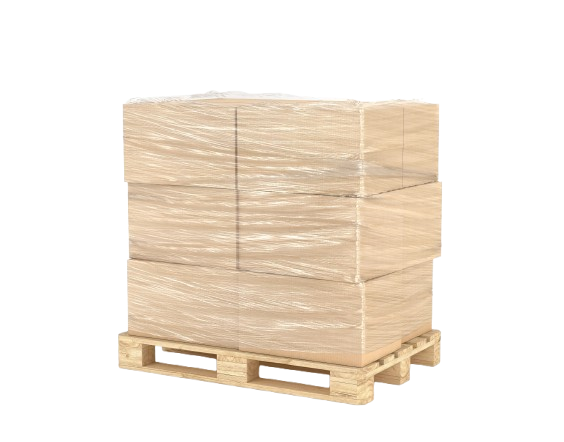
A standard pallet is 48" L x 40" W.
NMFC Density Scale
FCDC 13-subprovision full-density scale, effective July 19, 2025.
| Freight Class | Weight per cubic foot |
|---|---|
| 50 | 50+ lbs. |
| 55 | 35–<50 lbs. |
| 60 | 30–<35 lbs. |
| 65 | 22.5–<30 lbs. |
| 70 | 15–<22.5 lbs. |
| 85 | 12–<15 lbs. |
| 92.5 | 10–<12 lbs. |
| 100 | 8–<10 lbs. |
| 125 | 6–<8 lbs. |
| 175 | 4–<6 lbs. |
| 250 | 2–<4 lbs. |
| 300 | 1–<2 lbs. |
| 400 | <1 lb. |
Density scale shown for reference. The National Motor Freight Classification (NMFC) is published by the National Motor Freight Traffic Association (NMFTA), which is the sole authority on NMFC commodity classifications. For an authoritative class on a specific commodity, consult the NMFC directly via NMFTA's ClassIT tool or your carrier.
Watch: freight class explained
How density sets your class, worked through step by step, in 5:41.
Shipping a whole pallet or multiple boxes?
The Pallet Calculator is the multi-item upgrade to this tool — it packs your boxes onto pallets, reserves the pallet deck height, and reports each loaded pallet's dimensions, gross weight, and density-based freight class for the whole shipment.
How the Freight Class Calculator works
- Enter weight and dimensions — the shipment's weight and its length, width, and height in inches.
- The tool finds your density — it converts the dimensions to cubic feet and divides weight by volume (lbs per cubic foot).
- Get your estimated class — that density is mapped to the corresponding NMFC freight class.
Density is the main driver — but not the only one
For most palletized LTL freight, density determines the class: pack more weight into less space and you land in a lower, cheaper class. The official NMFC system also factors liability, handling, and stowability, so fragile, hazardous, or awkward-to-stack items can class higher than density alone suggests. Use this estimate to budget and to sanity-check a carrier's classification — then confirm anything unusual against the NMFC.
Freight class FAQs
What is freight class?
Freight class is a standardized NMFC code from 50 to 500 that LTL carriers use to price shipments. Lower classes (denser, easy-to-handle freight) cost less to ship; higher classes (light, bulky, or fragile freight) cost more.
How is freight class calculated from density?
Density is your shipment's weight divided by its volume in cubic feet — weight ÷ ((L × W × H) ÷ 1,728). Higher density generally maps to a lower, cheaper class. This calculator computes your density and maps it to the corresponding freight class.
Is density the only factor in freight class?
No. The official NMFC class also weighs liability, handling, and stowability. For most palletized freight, density is the main driver — but fragile, hazardous, or hard-to-stow items can class differently regardless of density. This tool estimates by density only.
Why does freight class matter?
Class is a primary input to LTL pricing. Under-declaring your class can trigger a carrier reweigh and reclass, which shows up as a surprise adjustment fee on your invoice — so it pays to estimate it correctly up front.
How do I measure my shipment for freight class?
Use the full outer dimensions including the pallet, and the total packaged weight. Measure the smallest rectangular space the freight occupies, and round up.
Is the freight class calculator free?
Yes — it's free to use and requires no account.
Related freight tools
- LTL Carrier Directory — the national and regional carriers that price your class.
- Pallet Calculator — class, dimensions, and weight for an entire palletized shipment (multiple boxes).
- Linear Feet Calculator — estimate the trailer space your freight needs.
- Hazmat Placard Calculator, for hazardous freight: which placards the truck needs.
- Dimensional Weight Calculator — chargeable weight for parcel and air.
- Freight Class Guide — the full reference on NMFC classes.
- Quote from a document — if the dimensions and weight are already on a PO or packing list, upload it and skip the typing.
- LTL vs. Partial Truckload — when your freight is big enough that class stops mattering.
- LTL Shipping Cost Guide — how class, weight and distance set the price.
- Get a freight quote — price and book your LTL shipment.