
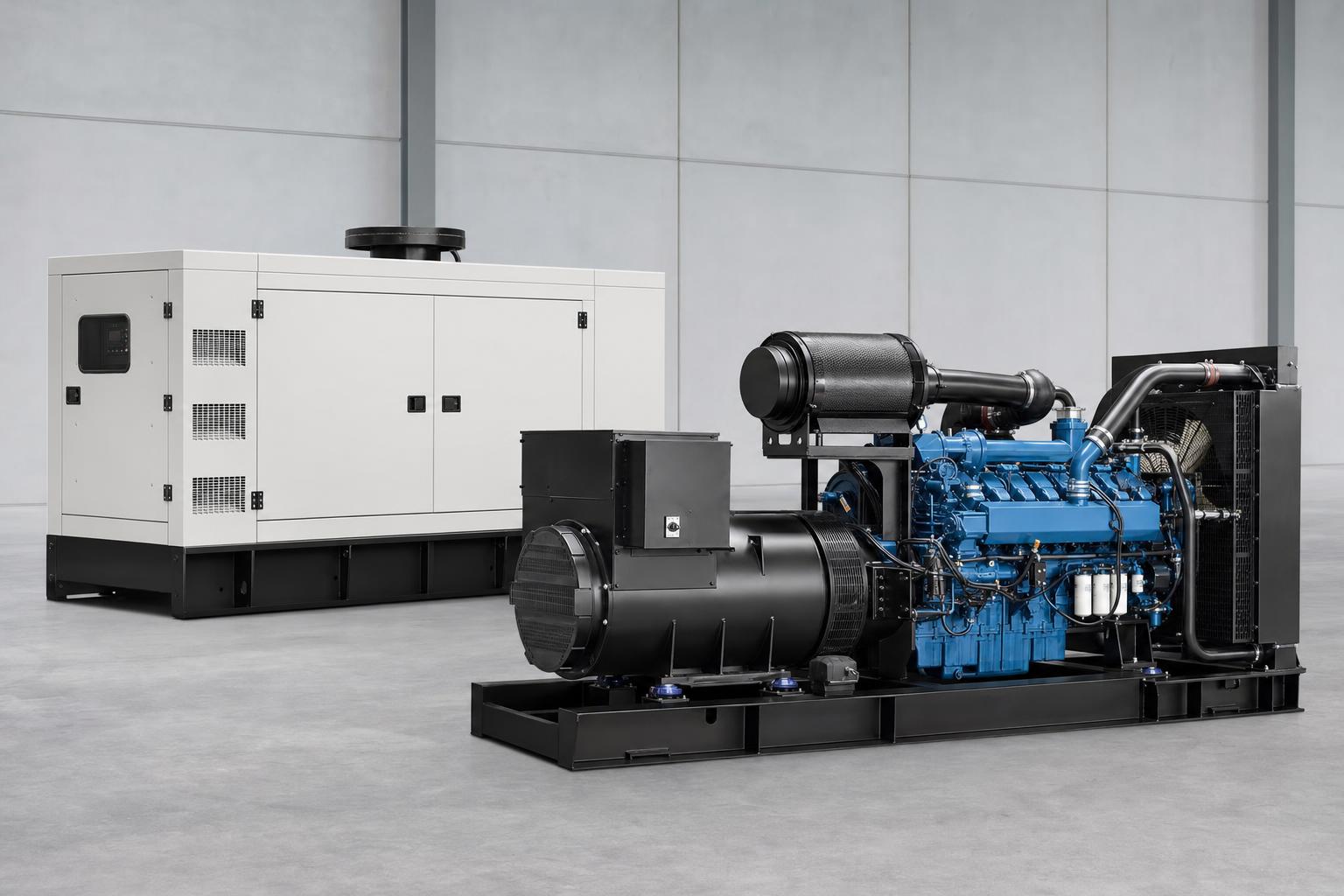
Shipping Diesel & Natural Gas Generators: LTL vs. Full Truckload
A 45 kW diesel generator weighs roughly 2,800 lbs and sits on a skid that's about 80" long. A 500 kW natural gas standby unit can push 12,000 lbs and stretch past 160" before you add the base frame. Same product category — wildly different freight problems. The mode that's right for one will cost you real money if you apply it to the other.
This guide cuts through the decision. We'll show you exactly where LTL ends, where partial truckload picks up, and when a dedicated truck is the only answer — with the specific weight and dimension thresholds that drive each choice. By the end, you'll know which mode fits your generator before you ever call a carrier.
The Decision Framework: Mode by Mode
Before diving into the specifics of generator shipping, here's the at-a-glance comparison. Use this as your starting point, then read the sections below for the nuances that matter most for this commodity.
| Factor | LTL | Partial Truckload | Full Truckload |
|---|---|---|---|
| Typical generator size | ≤ 45 kW, 1–2 pallets | 75–350 kW, 3–6 skids | 400 kW+, multiple large units |
| Weight range | Under 10,000 lbs | 10,000–30,000 lbs | 30,000+ lbs (or by volume) |
| Linear feet | ≤ 12 linear feet | 12–32 linear feet | > 32 linear feet |
| Equipment | Dry van (enclosed) | Dry van, flatbed, step deck | Dry van, flatbed, step deck, RGN |
| Cost profile | Lowest per-shipment cost | Mid-range — shared space | Highest total cost, lowest per-unit if moving multiple |
| Transit time | 2–5 days (multiple handling events) | 2–4 days (fewer touches) | 1–3 days (direct, no stops) |
| Damage risk | Moderate — freight transfers between terminals | Low — fewer handling events | Lowest — no co-mingling with other freight |
| Height clearance | 9 ft max (enclosed van) | 10 ft (step deck), 11.5 ft (double drop) | Up to 12 ft (RGN) — or permitted over-dim |
| Best for | Small portable/residential generators | Mid-size commercial/industrial units | Large industrial, data center, hospital standby power |
When LTL Works for Generator Shipping
LTL is the right call when your generator is small, palletized, and under 10,000 lbs — and when it fits inside a standard 53-foot enclosed trailer without any dimensional issues. Think residential standby units in the 7–22 kW range, portable diesel generators used for job sites or events, or small natural gas units destined for light commercial applications.
The math is simple: calculate your linear feet (length of the skid ÷ 12). If you're at 12 linear feet or under and the total shipment weight is under 10,000 lbs, LTL is your lane. A single 22 kW generator on a 48" × 48" skid weighing 1,100 lbs? That's 4 linear feet and a clean LTL move.
One critical caveat: LTL carriers use enclosed dry vans. That means your generator must fit within 9 feet of height clearance and 102 inches of width. Most skid-mounted residential and light commercial generators clear this easily. But if your unit has a weather enclosure, sound-attenuating housing, or a tall exhaust stack, measure before you book — an inch over 9 feet forces you out of LTL entirely.
Freight class matters here too. Generators typically fall between Class 85 and Class 125 depending on density. A compact 15 kW unit packed tightly on a skid might hit 10–12 lbs/ft³, landing it at Class 85–92.5. A larger unit with a lot of air space inside the enclosure could drop below 8 lbs/ft³ and push into Class 100 or higher. Use the freight class estimator to nail this before booking — misclassifying a generator upward by two classes can add $200–$600 to an LTL invoice.
When Partial Truckload Is the Sweet Spot
Partial truckload — sometimes called shared truckload — is the mode most generator shippers don't know exists. It fills the gap between LTL and a dedicated truck: shipments between 12 and 32 linear feet, or between 10,000 and 30,000 lbs. For generators, this covers a huge swath of the mid-size commercial and industrial market.
A 100 kW diesel generator on a full skid typically weighs 4,000–6,000 lbs and runs about 120" long — that's 10 linear feet. Add a second unit or a transfer switch and you're at 14–18 linear feet and 8,000–12,000 lbs. That's squarely in partial territory. You're sharing trailer space with one or two other shippers, but your freight doesn't get unloaded and reloaded at a terminal like it does in LTL. Fewer touches means lower damage risk.
Partial also opens up equipment options that LTL can't offer. If your generator is 9.5 feet tall — common for units with full weather enclosures — a step deck trailer clears 10 feet legally without a permit. That's a move LTL simply cannot make. Step deck service on a partial load gives you the cost efficiency of shared space with the equipment flexibility of open-deck freight.
One thing to watch: partial truckload rates carry a premium over LTL on a per-pound basis, but the total invoice is often lower than a dedicated truck. If you're moving two 150 kW generators from a manufacturer in Columbus, Ohio to a data center in Phoenix — roughly 1,800 miles — a partial move at 18 linear feet might run $2,800–$3,800. A dedicated flatbed for the same lane would start at $4,500. The math usually favors partial when you're in that 12–28 linear foot range.
When Full Truckload Is the Only Answer
Full truckload takes over when the generator — or the shipment of multiple generators — exceeds 32 linear feet or 30,000 lbs. Large industrial standby units in the 500 kW–2 MW range routinely hit both thresholds simultaneously. A single 1 MW natural gas generator can weigh 25,000–40,000 lbs and run 20+ feet on its base frame. Add a day tank, a paralleling switchgear cabinet, and installation hardware, and you're filling a truck.
For these moves, equipment selection is everything. Here's how to think through it:
- Dry Van (53' enclosed): Works for generators that fit within 9 ft height and 102" width, and don't require crane or forklift loading from the side. Best for units with dock-height delivery points.
- Flatbed (48'): The standard open-deck choice for generators up to 8.5 ft tall. Allows crane loading, side-forklift access, and delivery to sites without a dock. Expect a tarping charge of $75–$150 if the unit needs weather protection.
- Step Deck: For generators between 8.5 and 10 ft tall. The lower deck sits at 38" off the ground vs. 60" on a standard flatbed — that extra clearance is the whole point. Common for mid-to-large industrial units with full enclosures.
- Double Drop: When height runs 10–11.5 ft. Large natural gas generators with tall exhaust systems or acoustic enclosures often land here. The well sits at just 24" off the ground.
- RGN (Removable Gooseneck): For the heaviest units — 40,000+ lbs — or generators that need to be driven or rolled onto the trailer rather than crane-loaded. The gooseneck detaches and the deck tilts to ground level.
Dedicated truckload also wins on transit time and damage risk. No terminal stops, no co-loading, no freight being shifted around other people's pallets. For a $180,000 hospital emergency generator, the incremental cost of a dedicated truck over a partial move is noise compared to the risk of a damaged unit and a delayed commissioning date.
See the full flatbed service page and specialized/heavy haul service page for equipment specs and what FSK can arrange for oversized generator moves.
Over-Dimensional Generators: When You Need Permits
Most generators ship within legal dimensions. But the largest industrial and utility-scale units — think 2 MW+ diesel gensets for data centers, or large natural gas peaker units — can exceed the thresholds that trigger permit requirements.
The federal thresholds that trigger permit conversations: width over 102 inches, height over approximately 13'6" total (truck + freight), gross weight over 80,000 lbs, or total combination length over 75 feet. Cross any of those lines and you're in specialized/heavy haul territory — multiple state permits, possible escort vehicle requirements, and routing restrictions that can add 3–7 business days to the planning timeline.
A few real-world examples: A 2 MW Caterpillar diesel generator set on a base frame can weigh 65,000–80,000 lbs. A large Cummins natural gas generator with a sound-attenuating enclosure can stand 11–12 feet tall. Either of those moves needs a specialized trailer — likely an RGN or multi-axle configuration — and permit coordination before the truck rolls. Check state DOT regulations for the specific rules in each state your shipment crosses.
Packaging, Blocking, and Bracing Generators for Freight
Generators are dense, heavy, and expensive. They're also top-heavy — a lot of mass sitting above a relatively narrow skid base. That combination makes proper blocking and bracing non-negotiable, especially for LTL moves where the freight will be handled multiple times.
For LTL shipments: the generator should be secured to a 4-way entry skid rated for the unit's weight. Lag bolts through the skid base are standard. Wrap the unit in stretch wrap or poly sheeting to protect against road grime and moisture. If the unit has exposed electrical terminals, cover them. Label the skid with weight, dimensions, and "Do Not Stack" — because someone will try to stack something on it if you don't say otherwise.
For flatbed and open-deck moves: the carrier's driver is responsible for securement, but you should confirm the load plan before the truck leaves. Chains and binders are standard for heavy equipment. Ratchet straps are used for lighter units. For generators with delicate control panels or exposed components, a tarp is worth the $100 — moisture and road debris can cause problems that cost far more than that to fix.
One more thing: drain the fuel tank before shipping. Carriers can refuse a generator with fuel in the tank, and some LTL carriers classify a fueled generator as hazardous materials — which triggers a whole separate documentation and surcharge process. Ship it dry, fuel it at the destination.
Generator Freight Class: What to Expect
For LTL shipments, you'll need a freight class. Generators are classified under NMFC and — since the FCDC 13-subprovision scale took effect July 19, 2025 — density is the primary driver for most commodity-based classifications.
Here's how the density math typically plays out for generators:
- Small portable generators (2–10 kW): Often 8–12 lbs/ft³ depending on packaging. Expect Class 92.5–100.
- Mid-size residential standby (11–22 kW): Typically 10–14 lbs/ft³ on a skid. Class 85–92.5.
- Light commercial (25–60 kW): Density varies widely based on enclosure. 8–12 lbs/ft³ is common. Class 92.5–100.
- Large commercial/industrial (75 kW+): These are almost always too heavy or too large for LTL — but if they do qualify, density tends to be 10–15 lbs/ft³. Class 70–92.5.
Don't guess. Use the freight class estimator with the actual dimensions and weight of your unit. A two-class error on a 3,000-lb generator can mean a $300–$500 reclassification charge on delivery — and those charges are hard to dispute after the fact.
What Generator Shipping Actually Costs
Rates move with fuel, lane demand, and season — but here are realistic ranges to anchor your planning:
- LTL (small generator, 500–2,000 lbs, regional 500-mile lane): $180–$420. Cross-country adds $100–$200.
- LTL (mid-size generator, 2,000–6,000 lbs, regional): $350–$750. Cross-country: $600–$1,200.
- Partial truckload (2–4 generators, 12–20 linear feet, 1,000-mile lane): $1,800–$3,200.
- Full truckload flatbed (single large generator, 1,500-mile lane): $3,500–$6,000.
- Specialized/heavy haul (permitted move, multi-state): $5,000–$15,000+ depending on weight, width, and permit complexity.
Fuel surcharges add 15–30% on top of base rates depending on current diesel prices — check current U.S. fuel prices to understand where surcharges are running when you're booking. Accessorial charges (lift gate, residential delivery, inside delivery, limited access) can add $75–$300 per event on LTL moves. For large generators delivered to construction sites or remote facilities, budget for those.
Five Things Generator Shippers Get Wrong
- Booking LTL for a unit that's too tall. A generator with a full weather enclosure at 9'2" won't fit in a dry van. Measure the height including any exhaust stacks, lifting lugs, or protruding components before you book.
- Leaving fuel in the tank. Even a small amount of diesel or natural gas residue can get a shipment flagged as hazmat. Drain it completely.
- Not accounting for delivery site access. A 48-foot flatbed can't navigate a tight commercial parking lot or a residential driveway. If the delivery site has access restrictions, flag them at booking — not when the driver calls from the road.
- Underestimating freight class. Generators are denser than they look on paper, but their large enclosures can fool you into underestimating cubic footage. Measure the full exterior dimensions of the skid-mounted unit, not just the generator itself.
- Skipping the partial truckload option. Most shippers think in two modes — LTL or full truck. Partial truckload is the right answer for a lot of mid-size generator moves and can save $1,000–$2,500 on a cross-country lane compared to a dedicated truck.
If you're also shipping other industrial equipment or heavy machinery alongside your generators, the same LTL vs. truckload logic applies — the mode comparison framework for other industrial freight follows the same weight and linear-feet breakpoints described here.
Get a Generator Shipping Quote in Minutes
Freight Sidekick arranges LTL, partial truckload, full truckload, and specialized heavy-haul shipments for generators of all sizes — from a single 7 kW residential standby unit to a 2 MW industrial genset requiring permits and escort coordination. Our automated quoting platform handles mode detection automatically: enter your weight, dimensions, and equipment requirements, and the system routes you to the right rate engine. For oversized or complex generator moves, our team reviews the load directly. Get a rate at FreightSidekick.com/freight-quote, email us at support@freightsidekick.com, or call 877-345-3838 (Mon–Fri 5 AM–5 PM PT, Sat 9 AM–1 PM PT).


