Selling or buying a transmission on eBay sounds straightforward — until you realize you're dealing with a 100- to 300-pound chunk of metal that can't go in a FedEx box. Transmissions are heavy, awkwardly shaped, and sensitive to impact. Ship one wrong and you're looking at a damage claim, a furious buyer, and a refund you didn't budget for. This guide covers everything: how to prep and package a transmission, which freight mode to use, and how to keep costs from running away.
Why Shipping Transmissions Requires Special Attention
Transmissions typically weigh between 100 and 300 pounds and often exceed standard parcel carrier limits. That puts them squarely in LTL (Less-Than-Truckload) freight territory — or even partial truckload if you're moving several at once. A few things make them genuinely tricky:
- Weight and size: Most carriers cap parcel shipments at 150 lbs. A transmission blows past that. You need a freight carrier with lift-gate capability if either end lacks a loading dock.
- Impact sensitivity: Transmissions aren't fragile in the way glassware is, but a hard drop or shift in transit can crack a housing or damage internal components. Packaging matters.
- Fluid residue: Even a "drained" transmission can have residual fluid. Carriers have rules about hazardous materials — drain completely and seal all ports before shipping.
Preparing Your Transmission for Shipping
Prep work done right means fewer surprises at delivery. Here's the sequence:
- Clean the transmission: Remove dirt and grease. A clean unit is easier to inspect, and carriers may refuse a shipment that's visibly contaminated.
- Drain all fluids completely: Transmission fluid is a regulated material. Drain it, then seal every port and opening with plugs or tape. No exceptions.
- Inspect and document: Photograph the unit from every angle before packaging. If there's pre-existing damage, you want that on record before the carrier touches it.
- Package for freight, not parcel: LTL freight sees more handling events than a UPS box. Build the packaging to survive being forklift-loaded and stacked — not just dropped from waist height.
These steps also protect you on the claims side. Carriers will deny a damage claim if the packaging was clearly inadequate.
Packaging Your Transmission for Safe Shipping
LTL shipments move through multiple terminals and get handled several times. Your packaging needs to hold up across all of them. Here's how to do it right:
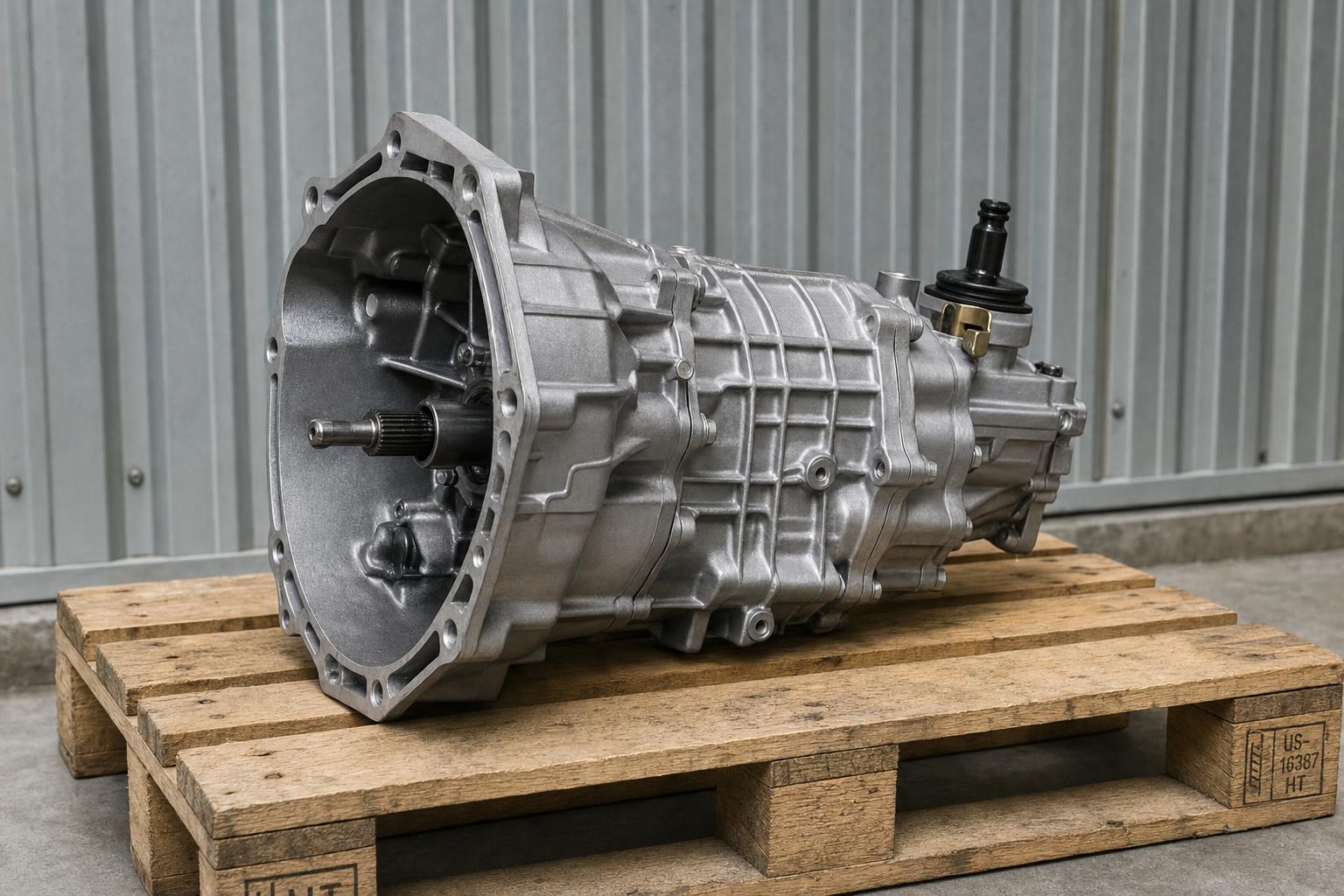
- Use a pallet: A 48" × 40" wood pallet is the standard. It gives forklift drivers a clean way to move the unit without contacting the transmission itself.
- Wrap with foam or bubble wrap: Cover all exposed metal surfaces — especially housings, ports, and any protruding shafts. Two inches of foam on impact points is not overkill.
- Strap it down tightly: Use heavy-duty ratchet straps to secure the transmission to the pallet. It should not shift at all when you push it. If it moves, add more strapping.
- Shrink-wrap the whole pallet: Once strapped, wrap the entire pallet in stretch film — top to bottom, at least 3-4 passes. This keeps everything together and signals to handlers that it's a single unit.
- Label clearly: Attach the shipping label to a flat, visible surface. Mark the shipment "Heavy — Do Not Stack" if the carrier allows custom labels. Use a Bill of Lading for every freight shipment — it's your legal record of the transaction.
Proper packaging is the single biggest factor in whether a transmission arrives intact. Don't cut corners here.
Choosing the Right Shipping Mode
For a single transmission, you're almost always looking at LTL freight — a dry van trailer shared with other shippers' freight. If you're moving multiple units (more than about 16 pallets at once), partial truckload or full truckload may be more cost-effective; below that, LTL and volume LTL usually price lower. Here's how the modes stack up:
| Shipping Mode | Best For | Typical Cost Driver | Notes |
|---|---|---|---|
| LTL (Less-Than-Truckload) | 1–3 transmissions or a few pallets of them, up to ~20,000 lbs / 28 linear ft | Freight class, weight, distance | Most common choice for eBay sellers. Shared trailer space. Lift-gate add-on available if no dock. |
| Partial Truckload | Large volumes, 28–32 linear ft / 20,000–30,000 lbs | Linear feet, weight, lane | Fewer handling events than LTL. Good for bulk eBay sellers moving inventory. |
| Full Truckload (FTL) | Large volumes filling a 53' dry van | Flat per-mile rate | Rarely needed for individual eBay transactions. Makes sense for commercial rebuilders shipping in bulk. |
Not sure which mode fits your shipment? Use the truckload calculator or linear feet calculator to check where your load falls. The right mode saves real money — LTL on a single 200-lb transmission from Chicago to Dallas typically runs $150–$350 depending on freight class and accessorials.
Freight Class and How It Affects Your Rate
LTL carriers price by freight class — a number from 50 to 500 that reflects density, handling difficulty, and liability. Transmissions are dense, which generally means a lower (cheaper) freight class. A 200-lb transmission on a 48" × 40" pallet at 8" tall has a density of roughly 18–22 lbs per cubic foot, which typically puts it in Class 70 or Class 85. Use the freight class estimator to get the exact number before you quote. Misclassifying will trigger a carrier reclassification and an unexpected invoice adjustment after delivery.
For a deeper dive on how class is calculated, see the freight class guide.
- Weight and dimensions: Heavier and larger transmissions cost more to ship. Weigh and measure accurately — carriers re-weigh at the terminal.
- Distance: A Chicago-to-Dallas lane will cost less than Chicago-to-Seattle. LTL rates are zone-based.
- Accessorials: Lift-gate pickup or delivery adds $50–$100 each way. Residential delivery adds another $50–$75. If neither end has a dock, budget for both.
- Insurance / declared value: Standard LTL liability is based on freight class and weight — often not enough to cover a rebuilt transmission worth $800–$2,500. Declare the value or add cargo insurance if the unit is worth more than the carrier's standard liability.
Get a freight quote before you list the item on eBay. That way you know your shipping cost before you price the transmission — not after.
Tips for Buyers Receiving Transmissions
If you're on the receiving end, a few steps protect you if something goes wrong:
- Inspect before signing: Check the pallet and packaging for visible damage before the driver leaves. If you see damage, note it on the delivery receipt — "subject to inspection" is not enough. Describe what you see.
- Photograph everything: Shoot the pallet as delivered, the packaging as you open it, and the transmission itself. These photos are your evidence if you need to file a freight claim.
- File claims quickly: Visible damage claims must typically be filed within 5 business days. Concealed damage (found after unpacking) within 15 days. Don't wait.
Keep communication with the seller open throughout transit. Most LTL carriers provide a PRO number for tracking — ask for it.
Conclusion
Shipping a transmission on eBay isn't complicated once you know the rules: palletize it, drain it, strap it down, pick the right freight mode, and get the freight class right. Do those five things and the odds of a damage claim or a billing surprise drop dramatically. Whether you're a one-off seller or a rebuilder moving inventory regularly, LTL freight is almost always the right starting point — and partial or truckload options are there when volume justifies it.
Personalized Assistance
Ready to ship? Get a freight quote, call 877-345-3838, or email support@freightsidekick.com.