
Freight Reference · Equipment
Semi-Truck Trailer Types, Dimensions & Capacity
What every full-truckload trailer is, how big it is inside, how much it carries, and which one your freight actually needs — with a comparison chart and a trailer finder.


The 53′ dry van — the default trailer, and what our lane rates assume.
At a glance
Every trailer, side by side
The fast reference: usable height, weight capacity, and the freight each trailer is built for. Tap a name to jump to its full spec sheet.
| Trailer | Usable height | Cargo payload | Best for |
|---|---|---|---|
| Dry Van | 9′2" (110") | 42,000–45,000 lb | Standard enclosed, palletized & boxed freight |
| Refrigerated (Reefer) | 8′8" (104") | ~43,000 lb | Temperature-controlled (refrigerated or frozen) |
| Flatbed | open — up to ~8′6" (102") | 46,000–48,000 lb | Open-deck, oversized, side/top-loaded freight |
| Step Deck | open — up to ~10′ (120") | 44,000–47,000 lb | Tall open-deck freight (~8′6" to 10′) |
| Double Drop | well — up to ~11′6"–12′ (138–144") | ~40,000 lb | Over-dimensional / very tall freight (10–12′) |
| RGN (Removable Gooseneck) | well — up to ~12′ (144") | 40,000–44,000 lb | Drive-on heavy equipment (excavators, dozers) |
| Conestoga | up to ~8′6" (102") | 42,000–44,000 lb | Open-deck freight that needs weather protection |
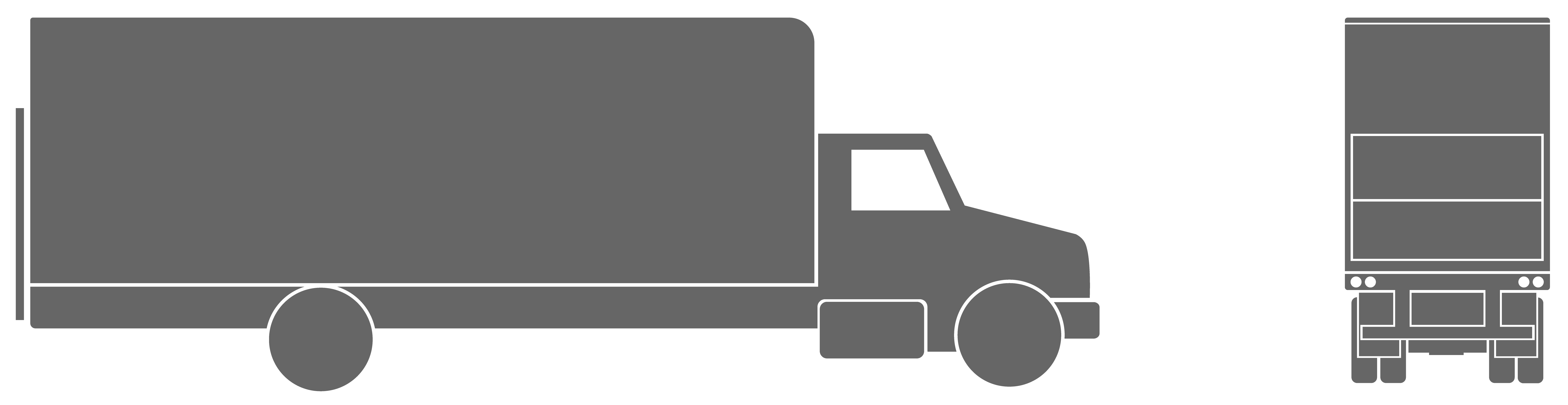
| Straight / Box Truck | up to ~9′ (108") | ~10,000 lb (26′ non-CDL) | Urban / limited-access, smaller loads |
| Power Only | n/a — you supply the trailer | — | Tractor only; customer provides the trailer |
Federal limits: 80,000 lb gross · 8′6″ (102″) wide. Height is state-set — 13′6″ in most states, 14′ in many Western states. Payloads shown are legal usable weight under the 80,000 lb cap — not trailer GVWR; actual payload depends on tractor weight. Sizing a partial or full load? Truckload Calculator · Linear Feet Calculator.
Find your trailer
Which trailer fits my freight?
Enter your tallest item and total weight, flag refrigeration or open-deck loading, and we'll point you to the right trailer — using the same logic our quote wizard runs.
Matched on usable height, weight, refrigeration, and loading method — the same logic our quote wizard runs.
Open-deck clearance
Why a lower deck fits a taller load
On an open deck, how tall your freight can be is simply the legal height limit minus the deck height. A lower deck buys more usable height under the same ceiling — which is exactly why step decks and double drops exist.
Drawn to scale: each open deck can load right up to the same legal ceiling, so the deck is the only thing that changes. As the deck (gray) drops left → right, the usable cargo height (green) grows — which is exactly why a step deck or double drop hauls what a flatbed can't. Enclosed dry vans and reefers are fixed-height boxes; their dimensions are in the table above.
*13′6″ is the height limit in most states; a number of (mainly Western) states allow up to 14′.
Spec sheets
Enclosed: dry van & reefer
Fully boxed equipment that protects freight from weather and loads at a dock. The default for general and temperature-controlled freight.
Dry Van
The default for general freight — a fully enclosed box that protects almost anything that fits inside and doesn't need temperature control.
| Inside length | 52′6" (53′ trailer) |
|---|---|
| Inside width | 8′3" (99") |
| Inside height | 9′2" (110") |
| Door opening | ~98" × 104" (W×H) |
| Cargo payload | 42,000–45,000 lb |
| Pallet positions | 26–30 (48×40) |
| Cubic capacity | ~3,400–3,800 ft³ |
Roll-up (overhead) doors typically eat ~6" of interior width and a little height versus swing doors — worth checking if your load is wide or tall.
Refrigerated (Reefer)
A dry van with an insulated body and a front-mounted cooling unit — for anything that has to stay cold, frozen, or within a set temperature band.
| Inside length | 51′7" |
|---|---|
| Inside width | 8′1¼" (97¼") |
| Inside height | 8′7"–8′8" (104") |
| Temp range | ‒20°F to 70°F |
| Cargo payload | ~43,000 lb |
| Cubic capacity | ~3,000–3,400 ft³ |
The reefer unit and insulation steal 2–5 ft of length in the nose and a couple inches all around — usable space is a bit smaller than a dry van, which is why payloads run lighter.


Spec sheets
Open deck: flatbed & step deck
No walls or roof — load from any side or the top by crane or forklift. For freight that's oversized, very tall, or won't fit through a van's doors.
Flatbed
An open deck with no walls or roof — load from any side or the top by crane or forklift. The workhorse for building materials, machinery, and anything that won't fit in a van.
| Deck length | 48–53′ |
|---|---|
| Deck width | 8′6" (102") |
| Deck height | ~5′ (60") |
| Max freight height | ~8′6" (102") legal |
| Cargo payload | 46,000–48,000 lb |
There's no roof, so legal height is the only ceiling: ~8′6" of cargo on top of a 5′ deck reaches the 13′6" road limit. Open freight must be tarped and strapped/chained.


Step Deck
A flatbed with a lower main deck (and a short upper deck near the nose). The drop lets you haul taller freight than a flatbed without a permit.
| Lower deck length | 37–42′ |
|---|---|
| Upper deck length | 10–11′ |
| Deck width | 8′6" (102") |
| Lower deck height | 36–42" |
| Max freight height | ~10′ (120") legal |
| Cargo payload | 44,000–47,000 lb |
Also called a "drop deck." The lower deck sits about 18" below a flatbed, so freight up to ~10′ tall still clears the 13′6" limit. Heavy equipment can be forklifted or ramped on.


Spec sheets
Heavy-haul & over-dimensional
Lowered decks that keep tall, heavy machinery under the 13'6" road limit. When a flatbed or step deck isn't low enough, these are next.
Heavy-haul loads are often over-dimensional — taller, wider, or heavier than the legal limits. Expect state permits, routing, and sometimes escorts. See state DOT limits.
Double Drop
A deck that drops to a low well in the middle, between a raised front deck and the rear axles — for the tallest freight that still moves on standard equipment.
| Well length | 24–30′ |
|---|---|
| Deck width | 8′6" (102") |
| Well floor height | 18–24" |
| Max freight height | ~11′6″–12′ in the well |
| Cargo payload | ~40,000 lb (up to 44,000) |
The center well sits low to the ground, so tall freight rides under the legal ceiling. Freight is loaded into the well by crane or forklift; very tall/wide loads may still need a permit.


RGN (Removable Gooseneck)
A double drop whose front gooseneck detaches and lowers the deck to the ground as a ramp — so heavy machinery can drive or roll straight on.
| Well length | 26–30′ |
|---|---|
| Deck width | 8′6" (102") |
| Well floor height | 18–24" |
| Max freight height | ~12′ (144") in the well |
| Cargo payload | 40,000–44,000 lb (more with added axles) |
The detachable front lets the deck drop to ground level so equipment drives on under its own power. With extra axles (flip/jeep), RGNs carry far heavier loads, but those move under permit.


Spec sheets
Specialty & flexible equipment
Purpose-built options for weather-protected open freight, tight urban deliveries, and moves where you bring your own trailer.
Conestoga
A flatbed or step deck fitted with a retractable rolling tarp on a frame — open-deck loading with the weather protection of a van.
| Length | 48–53′ |
|---|---|
| Width | 8′6" (102") |
| Usable height | 96–102″ (up to ~110″ on a step-deck base) |
| Cargo payload | 42,000–44,000 lb |
The rolling "wagon-top" tarp opens from either side or retracts fully for crane/forklift loading, then seals the freight from weather — no tarping by hand. The frame costs a little capacity versus a bare flatbed.


Straight / Box Truck
Cab and cargo box on a single chassis (no separate trailer) — smaller and far more maneuverable than a semi for city and limited-access deliveries.
| Box length | 12–26′ |
|---|---|
| Box width | 8′ (96") |
| Box height | 8–9′ (96–108") |
| GVWR | 26,000–33,000 lb |
| Cargo payload | ~10,000–12,000 lb |
Heads up: the headline weight on box trucks is usually GVWR, not payload — a 26′ non-CDL truck is ~26,000 lb GVWR but only carries ~10,000 lb of freight. One unit also means a tighter turning radius and easy access to lifts and tight streets; often paired with a liftgate where there's no dock.

Power Only
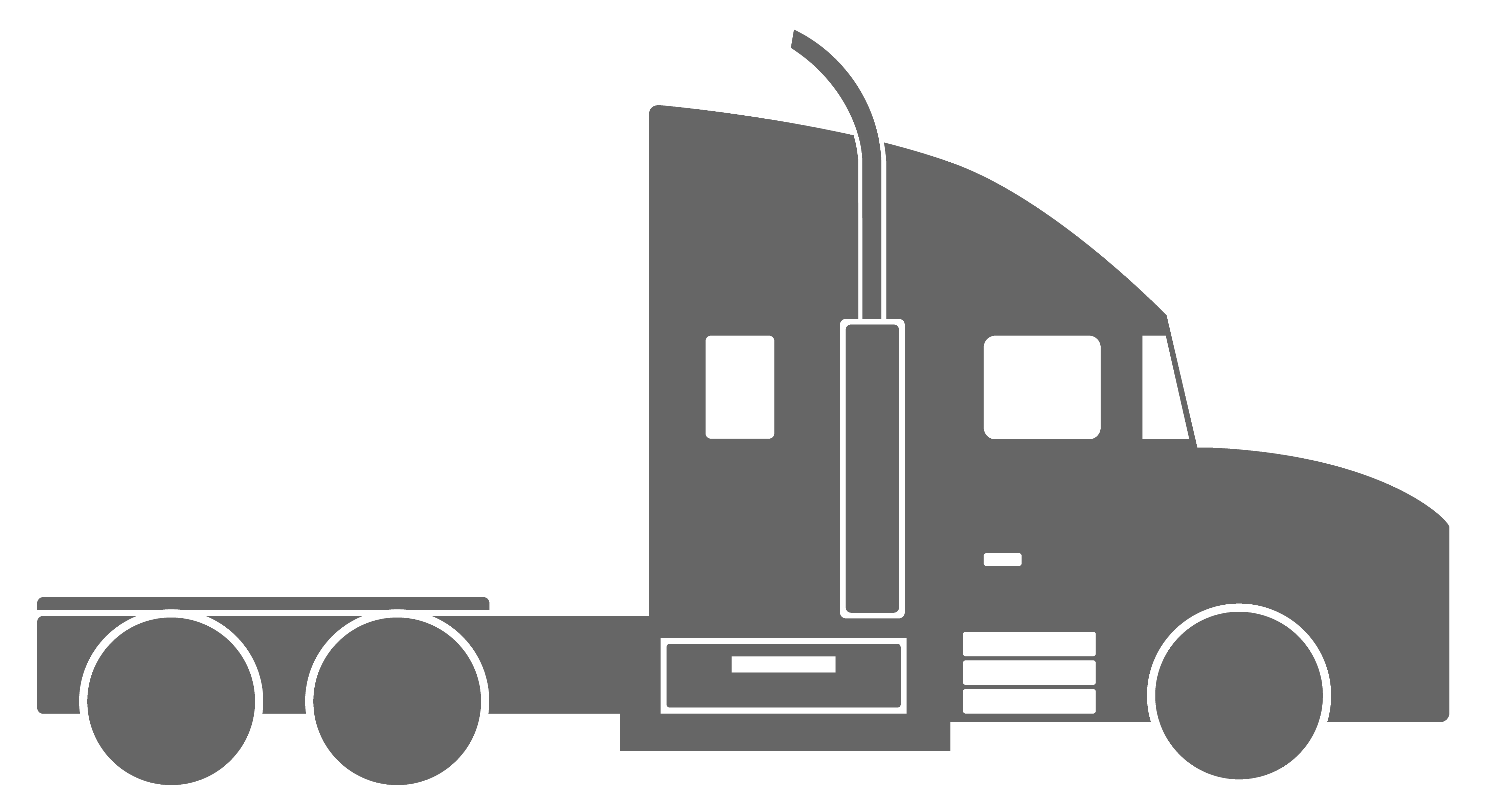
Just the tractor — you supply the trailer or container. For drop-and-hook moves, repositioning equipment, or pulling your own assets.
| Equipment | Tractor unit only |
|---|---|
| Cab types | Day cab or sleeper |
| Pulls | Your van, reefer, flatbed, or container chassis |
| Typical use | Drop-and-hook, container drayage |
There's no trailer to spec — capacity and dimensions are whatever equipment you provide. Confirm the tractor's fifth-wheel/kingpin and any required endorsements match your trailer.

How to choose
Picking the right trailer
All three are open decks that sit progressively lower so taller freight clears 13′6″. Choose by how tall the load is and how it loads:
- Step deck — up to ~10′ tall, forklift- or ramp-loaded. The everyday choice for freight a flatbed can't clear.
- Double drop — ~11′6″–12′ in the low well; crane- or forklift-loaded. For the tallest standard freight.
- RGN — same low well, but the gooseneck detaches into a ramp so machinery drives on. For excavators, dozers, and rolling equipment.
The enclosed-vs-open decision comes down to protection, loading, and temperature:
- Dry van — palletized or boxed freight that needs weather protection and loads at a dock.
- Flatbed — oversized or awkward freight loaded by crane/forklift from the side or top; must be tarped and secured.
- Reefer — anything that has to stay cold, frozen, or within a set temperature band.
Not sure? Run the trailer finder or compare LTL vs. truckload.
Regulatory
Legal weight, width & height limits
Trailer choice is mostly about keeping a load legal. Stay inside the limits below and any carrier can haul it; cross a line and you're into permits, escorts, and specialized equipment.
Federal cap on tractor + trailer + freight. A lighter empty weight (or extra axles) leaves more for cargo.
Anything wider needs an over-dimensional permit and, often, escort vehicles.
No federal height limit — most states cap at 13′6″, and many Western states allow 14′. A lower deck buys load height under this line.
A load becomes over-dimensional or overweight when it exceeds any legal limit — too wide, too tall, too long, or too heavy. Permits are issued per state (often $15–$100 each for routine moves; superloads cost more) and may require escorts, daylight-only travel, or specific routing. Picking the right low-deck or multi-axle trailer often keeps a load legal and avoids permits entirely. See your state DOT limits and permit rules for specifics.
FAQ
Frequently asked questions
Know your trailer? Get a rate.
Compare live LTL and truckload rates in minutes, or call. Allison answers at any hour, and our U.S.-based desk handles oversized and specialized freight.