
Free tools
Hazmat Placard Calculator
Enter each hazmat item on the truck with its class and gross weight. The calculator applies 49 CFR 172.504 and shows which placards the vehicle needs, and why.
Hazmat on the truck
Gross weight includes the packaging. Everything is assumed loaded at one facility.
Placards required
Table 2 total: 1,250 lb
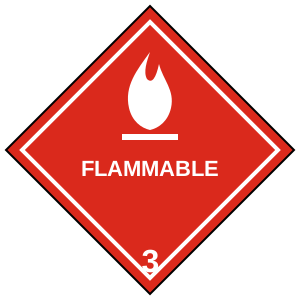
FLAMMABLE
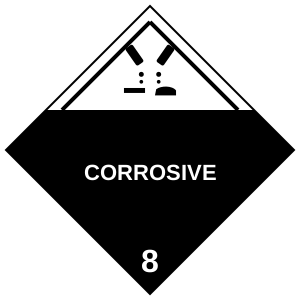
CORROSIVE
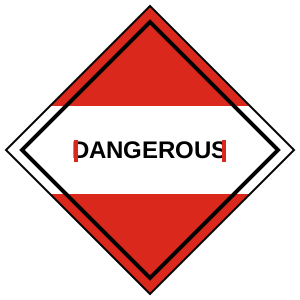
Option: one DANGEROUS placard
DANGEROUS can replace FLAMMABLE and CORROSIVE.
Why
- Table 2 materials total 1,250 lb, 1,001 lb or more: each non-bulk category that takes a placard is placarded.
Limits. Highway shipments in the US under 49 CFR 172.504. It doesn't cover rail, air or vessel, limited quantities, subsidiary-hazard placards (49 CFR 172.505), the OXYGEN placard, or materials with special provisions in the Hazardous Materials Table.
For reference only, not legal advice. These tools follow 49 CFR as revised October 1, 2025, and the regulations change. The shipper is responsible for classifying, packaging, marking, labeling, describing and placarding hazardous materials, so confirm the current rules for your material at ecfr.gov. See our Terms of Use.
How placarding works
Table 1: placard at any quantity
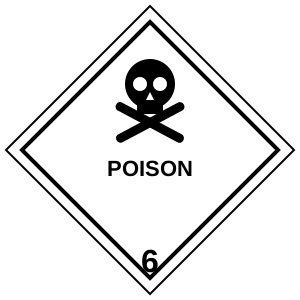
Explosives 1.1 to 1.3, poison gas 2.3, dangerous when wet 4.3, temperature-controlled Type B organic peroxide 5.2, poison inhalation hazard 6.1, and radioactive Yellow-III 7.
Table 2: placard at 1,001 lb or more
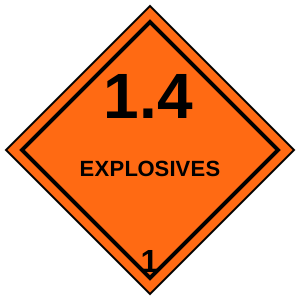
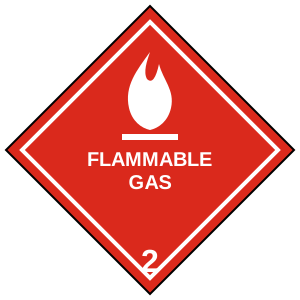
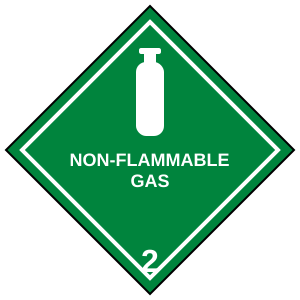
Every other class. Under 1,001 lb aggregate gross weight in non-bulk packages, no placards. Bulk packages are placarded at any quantity.
The DANGEROUS placard
Two or more Table 2 categories in non-bulk packages can share one DANGEROUS placard, unless 2,205 lb or more of one category is loaded at one facility. That category keeps its own placard.
Hazmat placard chart
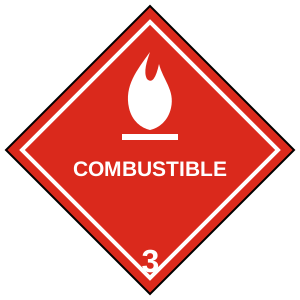
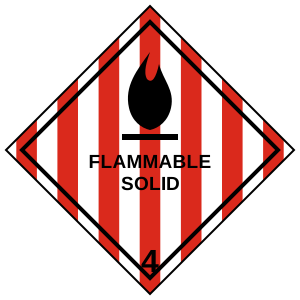
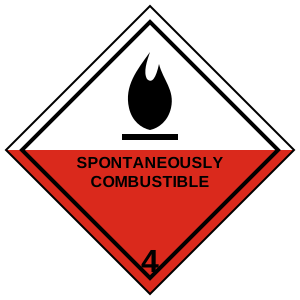
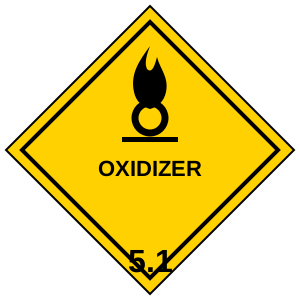
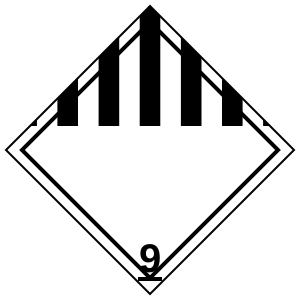
The placards in the two placarding tables of 49 CFR 172.504. Illustrations for reference: placard size, color and design are set by 49 CFR 172.519 and 172.521 to 172.560, so use compliant placards on the truck.
Table 1: placarded at any quantity
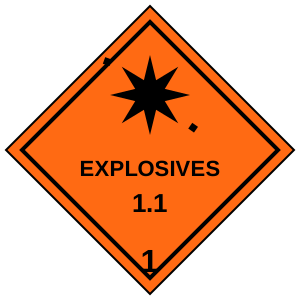
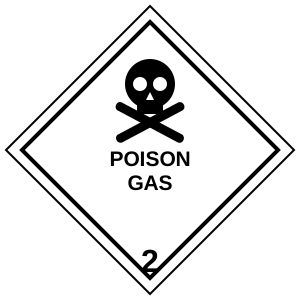
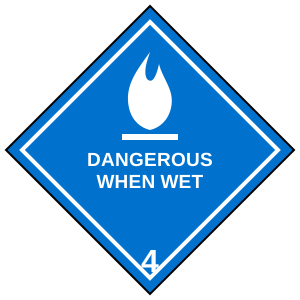
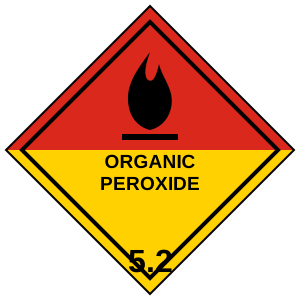
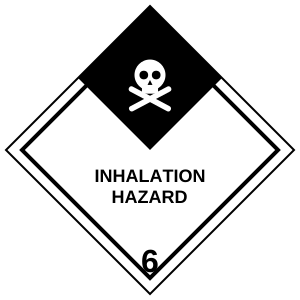
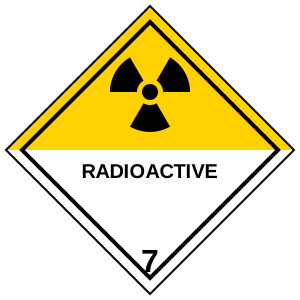
Table 2: placarded at 1,001 lb or more
Placard FAQs
When does a truck need hazmat placards?
Table 1 materials (such as Division 4.3 or 2.3) need placards at any quantity. Table 2 materials need them once the vehicle carries 1,001 lb or more of Table 2 hazmat, aggregate gross weight, and bulk packages at any quantity. Class 9 and Division 6.2 take no placard on a domestic highway trip.
When can I use the DANGEROUS placard?
When non-bulk packages of two or more Table 2 categories need different placards. A category with 2,205 lb or more loaded at one facility still needs its own placard.
Does a Class 9 load need placards?
Not for domestic highway transport. A CLASS 9 placard is optional in the US, but a bulk package still shows its UN number.
Who provides the placards?
The shipper offers them to the carrier, unless the vehicle already displays the right ones (49 CFR 172.506).
Does the driver need a hazmat endorsement?
Yes, when the load requires placards, or carries any quantity of a select agent or toxin (49 CFR 383.5). Below that, the hazmat endorsement is not required.
Ready to ship hazmat freight?
Mark the item hazmat in the quote form and compare rates.